The engineered option
Quartz Countertop Installation
Quartz countertops are engineered from crushed quartz and resin. They offer consistent color and pattern from slab to slab, which many homeowners love for clean, modern kitchens.
Quartz installation follows a similar path to granite, with a few differences worth knowing.
Comparing Quartz and Granite Honestly
Quartz typically does not need sealing, and its pattern is predictable. Granite is fully natural, with one of a kind movement, and tolerates heat better because quartz resins can scorch or discolor under hot pans.
Quartz used outdoors in direct sun can fade or yellow over time, so granite is generally the better choice for patios and outdoor kitchens.
Installing Quartz
- 01
Choose
Compare colors and veining patterns, ideally on full slabs.
- 02
Template
Cabinets and fixtures are measured precisely.
- 03
Fabricate
Slabs are cut and edged with care for the resin surface.
- 04
Install
Pieces are set and seams are color matched.
Daily Care for Quartz
Always use trivets under hot cookware on quartz. Clean with mild soap and water and avoid harsh solvents.
If you love the look of marble without the upkeep, quartz with soft veining is worth comparing side by side with natural options.
Related Countertop Services
Projects rarely involve just one step. These guides cover the work that most often comes before or after this service.
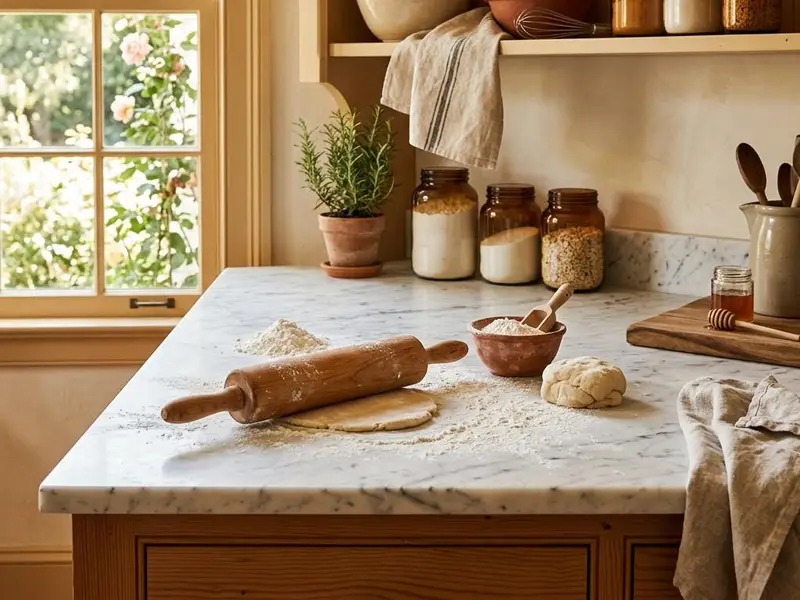
Marble Countertop Installation
Classic marble for baking stations, vanities and statement islands, with honest guidance on how it ages.
Explore Marble Countertop Installation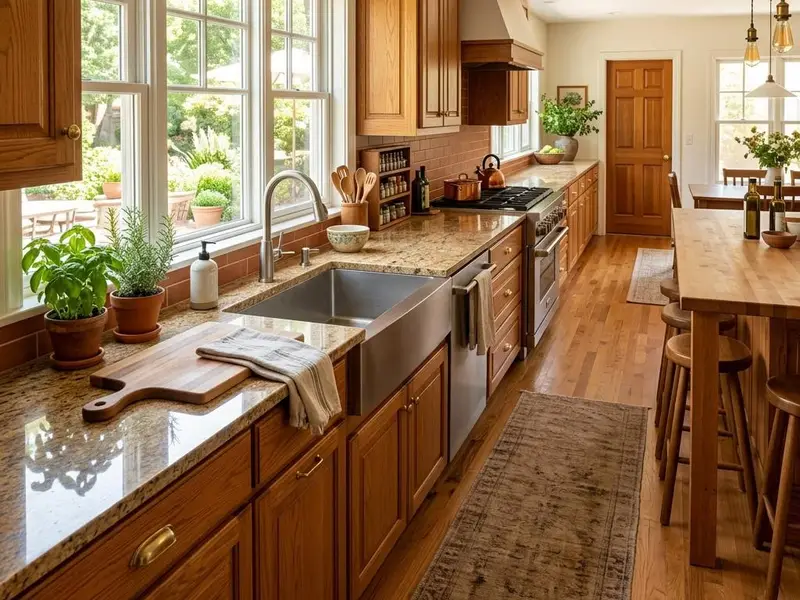
Kitchen Granite Countertops
Planning granite for the busiest room in the house, from sink runs and prep zones to color that hides daily crumbs.
Explore Kitchen Granite Countertops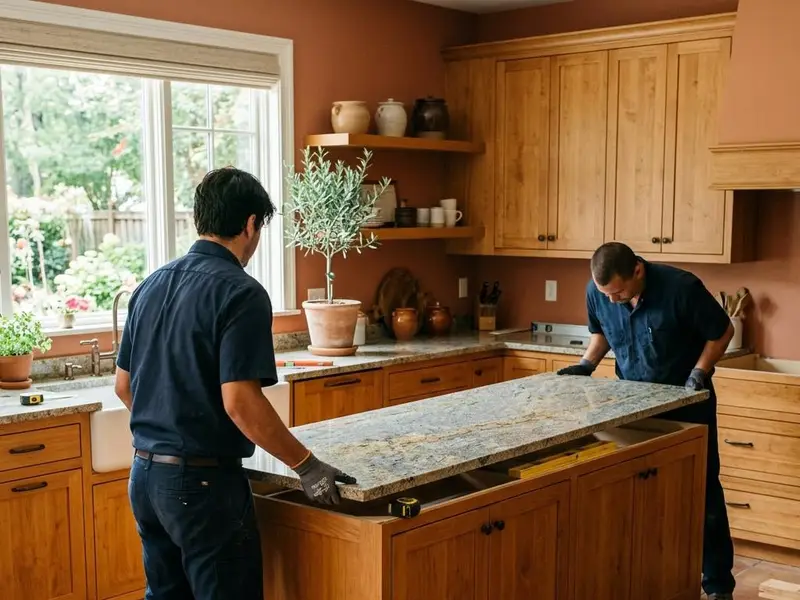
Granite Countertop Installation
The full path from slab selection to a sealed, level countertop with sink and cooktop openings ready for your plumber.
Explore Granite Countertop Installation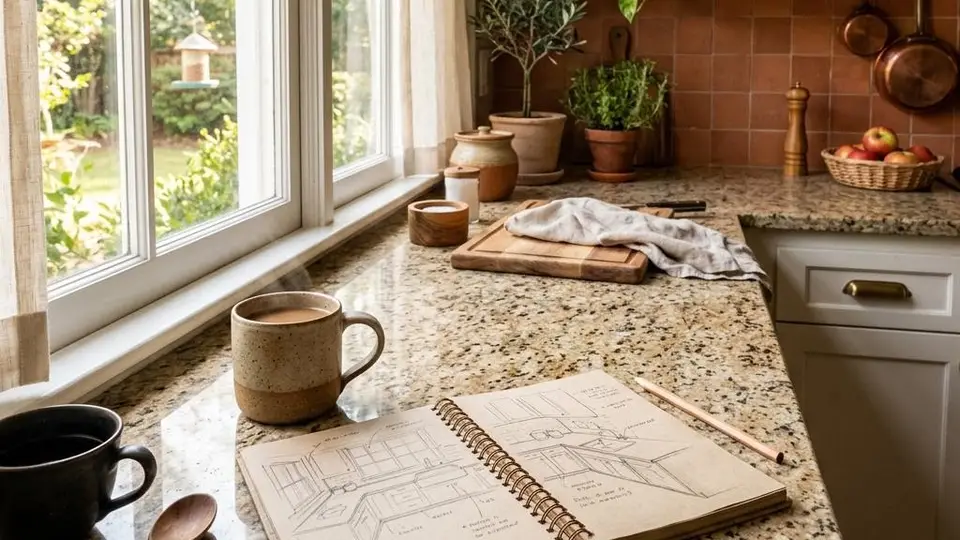
Talk Through Your Quartz Countertop Installation Project
Share a few photos, rough measurements and what you hope to change. A short conversation is the easiest way to plan the next step.