Invisible protection
Granite Sealing Service
Sealing places a penetrating protector inside the pores of granite. It does not create a coating on top; it slows liquids from soaking in so you have time to wipe them up.
This service focuses on first time sealing for new installations, untreated stone and surfaces such as outdoor kitchens that face harder conditions.
Does Every Granite Need Sealing?
Not every granite needs the same treatment. Some dense stones absorb very little, while lighter granites can absorb oil and water quickly. A simple absorbency test guides whether and how much to seal.
Over applying sealer to dense stone can leave a hazy film. Matching the product and amount to the stone is the point of a careful sealing service.
How Sealing Is Done
- 01
Test
Water and oil drop tests show how absorbent the stone is.
- 02
Clean and dry
Surfaces are cleaned and allowed to dry completely.
- 03
Seal
Sealer is applied and left to penetrate.
- 04
Buff and cure
Excess is removed and the sealer cures before heavy use.
Sealing Versus Resealing
Sealing is the first application on new or untreated stone. Resealing renews protection on stone that has worn over time. If your countertop is already a few years old, the resealing page may be the better fit.
Ask how long to wait before placing items back on the counter, since cure times vary by product.
Related Countertop Services
Projects rarely involve just one step. These guides cover the work that most often comes before or after this service.
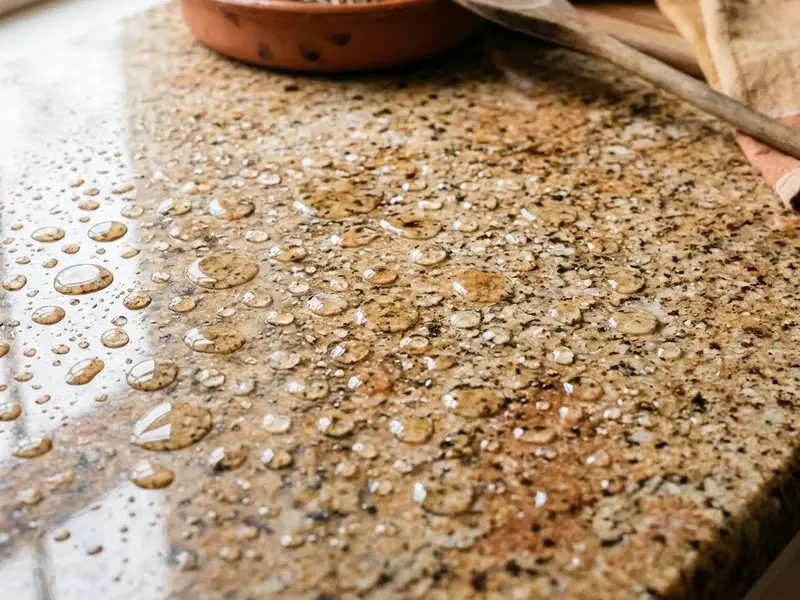
Granite Countertop Resealing
Deep cleaning and renewing the sealer on existing granite so water beads up and stains stay on the surface.
Explore Granite Countertop Resealing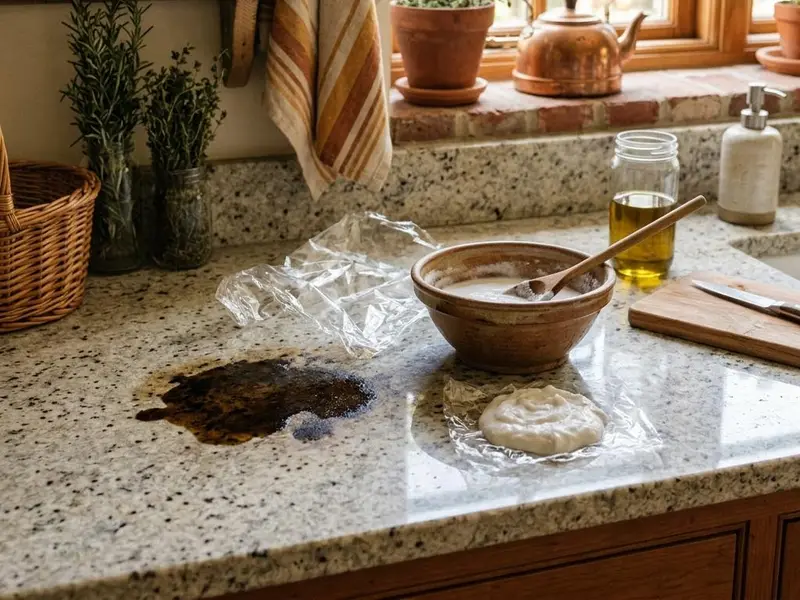
Granite Stain Removal
Drawing oil, water, wine and rust marks out of granite with poultices, then resealing so they do not return.
Explore Granite Stain Removal
Outdoor Kitchen Countertops
Granite for grills, patio bars and screened porch kitchens that face Carolina sun, heat and humidity.
Explore Outdoor Kitchen Countertops
Talk Through Your Granite Sealing Service Project
Share a few photos, rough measurements and what you hope to change. A short conversation is the easiest way to plan the next step.