
Refresh what you have
Granite Countertop Resealing
Sealer on granite wears down gradually with cooking, cleaning and time. Resealing renews that protection on an existing countertop.
It is a simple maintenance step that helps a countertop installed years ago keep resisting stains.
How to Tell Your Granite Needs Resealing
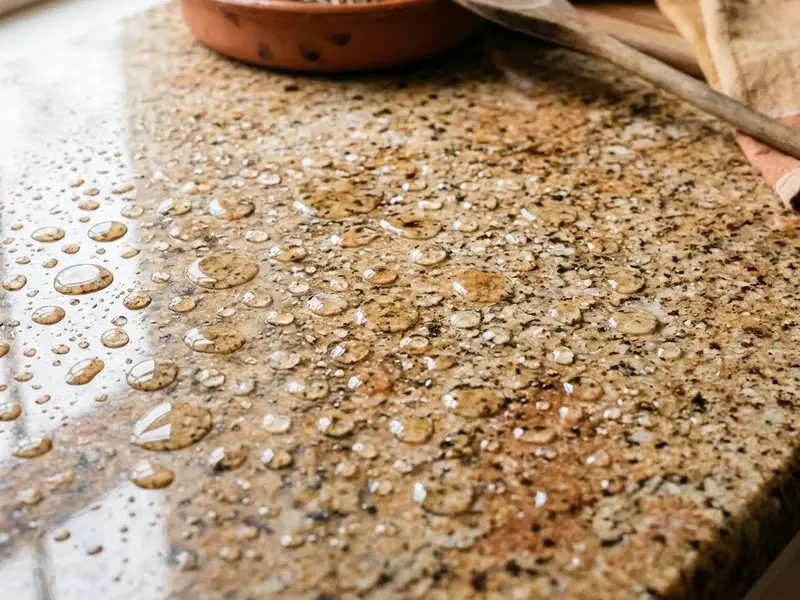
Drip a little water on a few spots, especially near the sink and stove. If it darkens the stone within several minutes, the sealer has worn thin there. If it beads up and stays on the surface, you are fine for now.
Some dense, dark granites barely absorb anything and rarely need sealing. Lighter, more porous stones may need it more often. The test tells you what your stone needs.
The Resealing Process
- 01
Clean
Built up residue from soaps and cleaners is removed.
- 02
Dry
The stone must be fully dry so sealer can penetrate.
- 03
Apply
Sealer is spread and allowed to soak in for the recommended time.
- 04
Buff
Excess is wiped away and the surface is buffed clear.
Cleaners That Are Kind to Sealer
Warm water with a small amount of mild dish soap handles daily cleaning. A stone specific spray works well too.
Avoid vinegar, lemon based cleaners, bleach and abrasive powders. They can strip sealer and dull a polished finish over time.
Related Countertop Services
Projects rarely involve just one step. These guides cover the work that most often comes before or after this service.
Granite Sealing Service
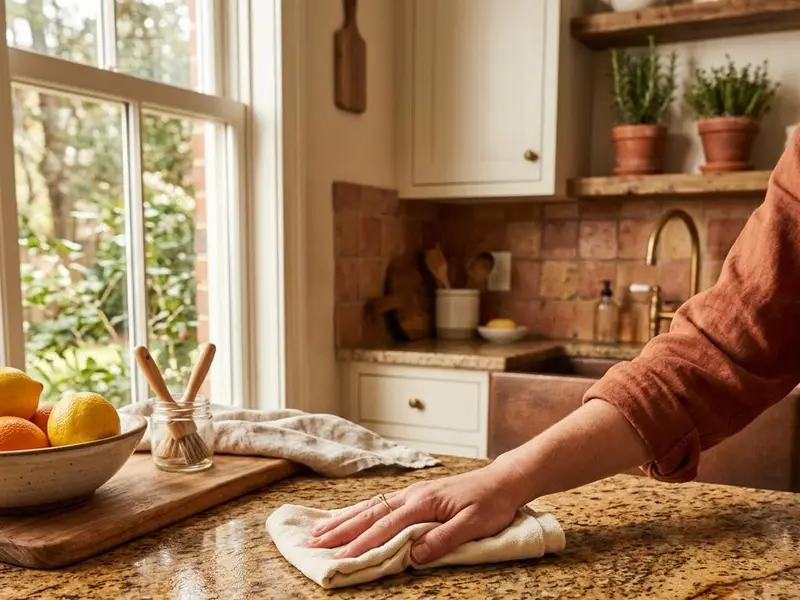
Sealing new or untreated granite with a penetrating sealer chosen for the stone, the room and how you use it.
Explore Granite Sealing Service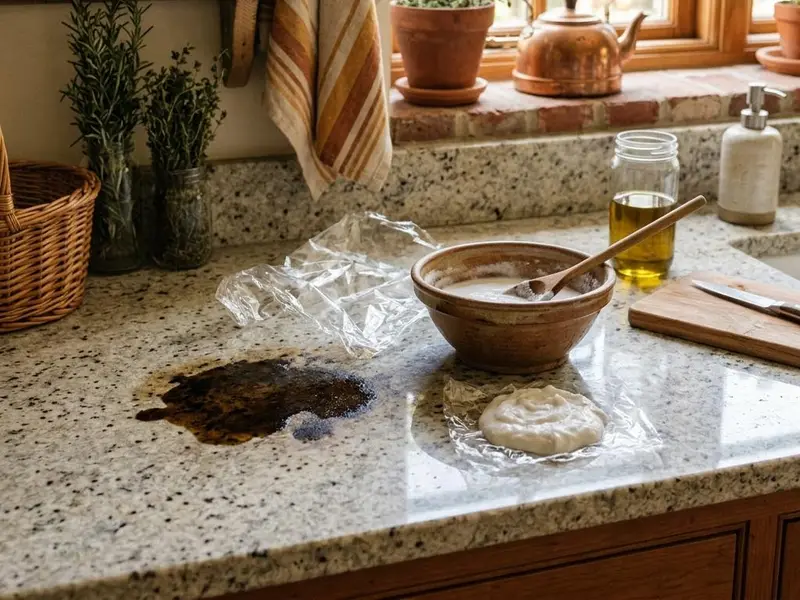
Granite Stain Removal
Drawing oil, water, wine and rust marks out of granite with poultices, then resealing so they do not return.
Explore Granite Stain Removal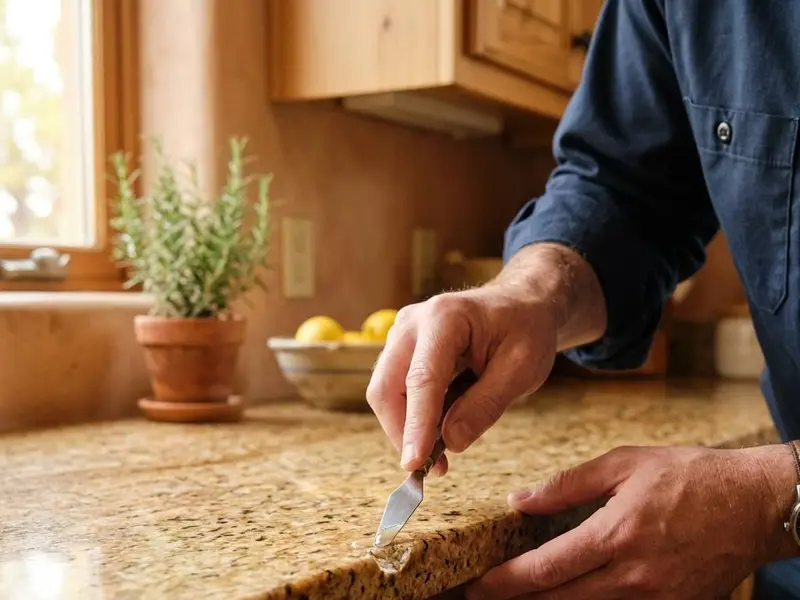
Granite Countertop Repair
Fixing chips, cracks, loose seams, dull spots and stains so a good granite top keeps serving your home.
Explore Granite Countertop Repair
Talk Through Your Granite Countertop Resealing Project
Share a few photos, rough measurements and what you hope to change. A short conversation is the easiest way to plan the next step.