
Lift it out
Granite Stain Removal
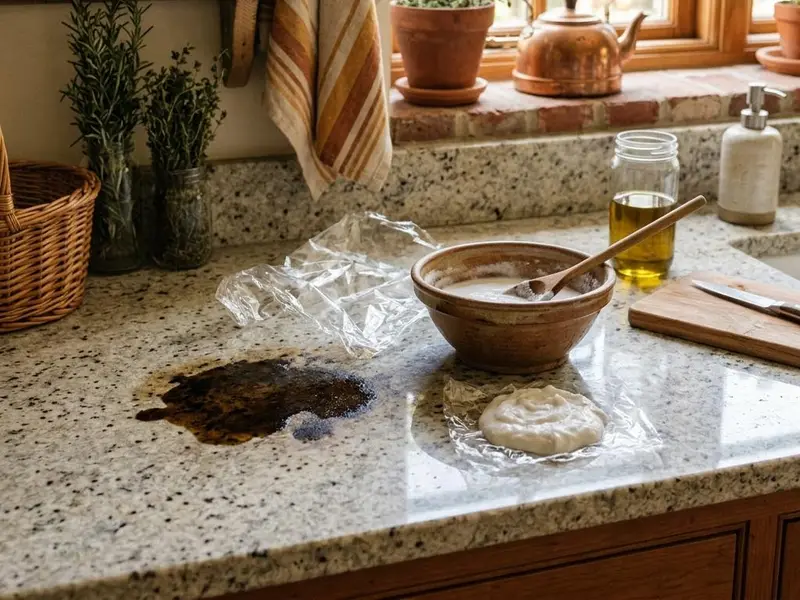
Granite is a natural stone with tiny pores. When the sealer wears thin, liquids can soak in and leave dark rings or blotches.
Most stains are not permanent. They can usually be drawn back out of the stone with patience and the right poultice.
Identifying the Stain Before Treating It
Oil stains look darker than the surrounding stone and often have a fuzzy edge. Water rings darken and then fade as the stone dries. Organic stains from coffee, tea or wine can leave brown or pink tones. Rust stains come from metal cans and fixtures.
Each type responds to a different poultice. Using the wrong cleaner, especially acidic or bleach based products, can dull polished granite.
How a Poultice Works
- 01
Clean
The surface is cleaned with a stone safe cleaner.
- 02
Apply
A thick paste is spread over the stain and covered.
- 03
Draw
As the paste dries over a day or two, it pulls the stain up out of the stone.
- 04
Seal
After the stain lifts and the stone dries, sealer protects the area.
Preventing the Next Stain
Keep cooking oils on a tray or small dish near the stove, and use coasters under glasses. Blot spills rather than wiping, which spreads them.
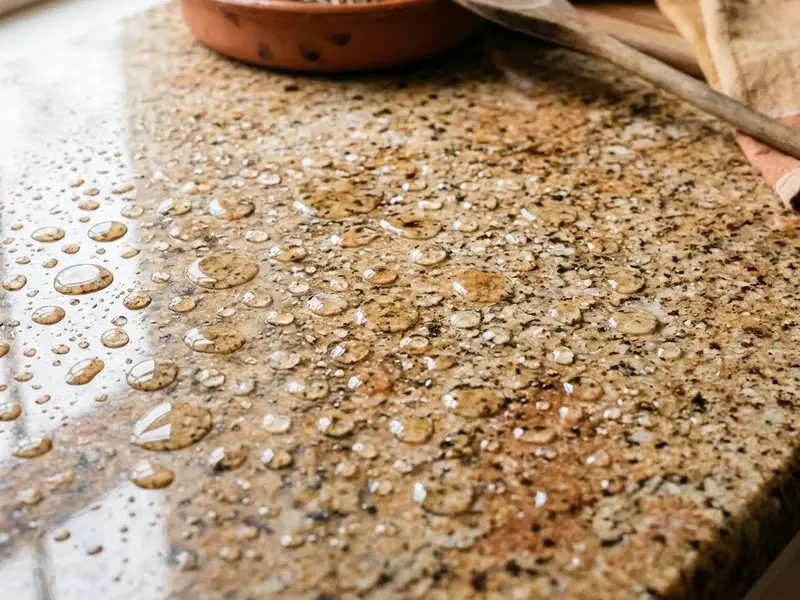
Do a simple water drop test every few months. If water darkens the stone within a few minutes, it is time to reseal.
Related Countertop Services
Projects rarely involve just one step. These guides cover the work that most often comes before or after this service.
Granite Countertop Resealing
Deep cleaning and renewing the sealer on existing granite so water beads up and stains stay on the surface.
Explore Granite Countertop Resealing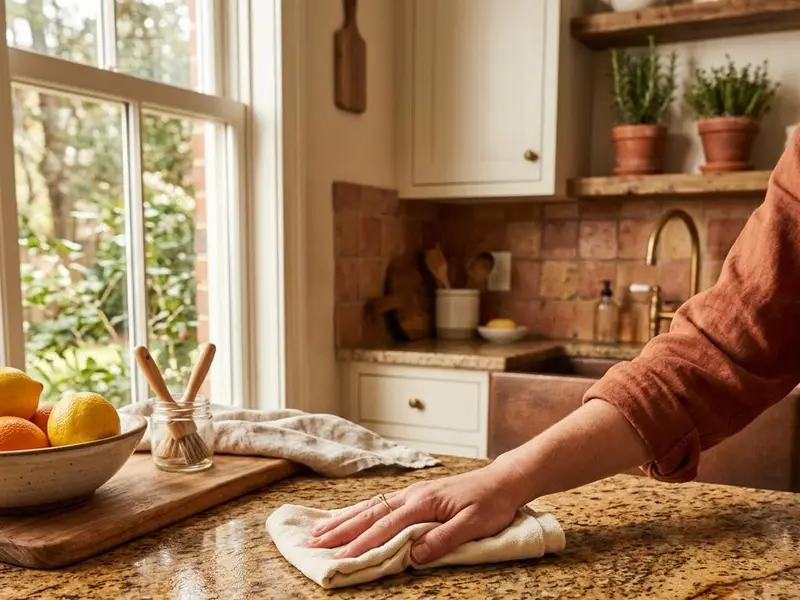
Granite Sealing Service
Sealing new or untreated granite with a penetrating sealer chosen for the stone, the room and how you use it.
Explore Granite Sealing Service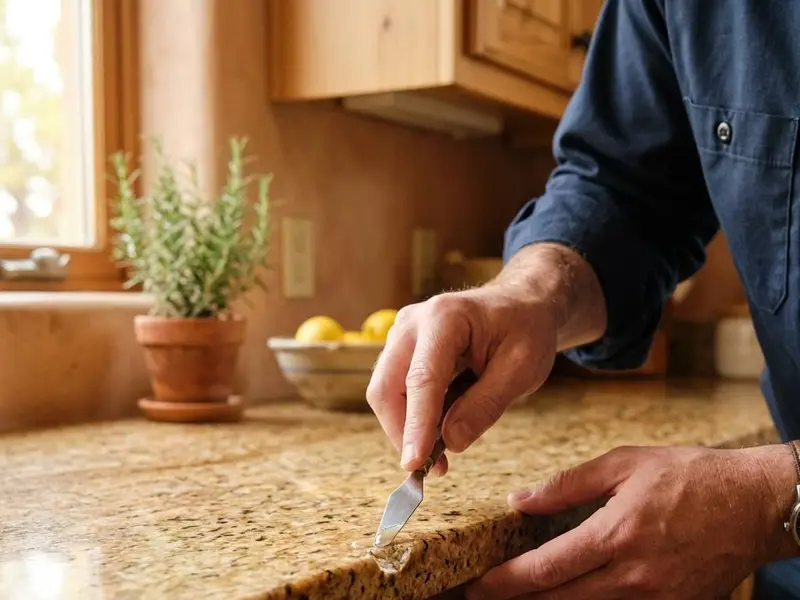
Granite Countertop Repair
Fixing chips, cracks, loose seams, dull spots and stains so a good granite top keeps serving your home.
Explore Granite Countertop Repair
Talk Through Your Granite Stain Removal Project
Share a few photos, rough measurements and what you hope to change. A short conversation is the easiest way to plan the next step.